
AI search is cannibalizing website traffic. People are now more likely to end their search journey on Google after encountering an AI-generated summary. A study found that sites previously ranked first can lose up to 79% of traffic if results appear below Google’s AI Overview.
Meanwhile, a MuckRack report, which tested generative AI chatbots to understand what AI is “reading”, revealed that 95% of links cited by AI are non-paid or earned media coverage. 27% of those links come from journalistic content.
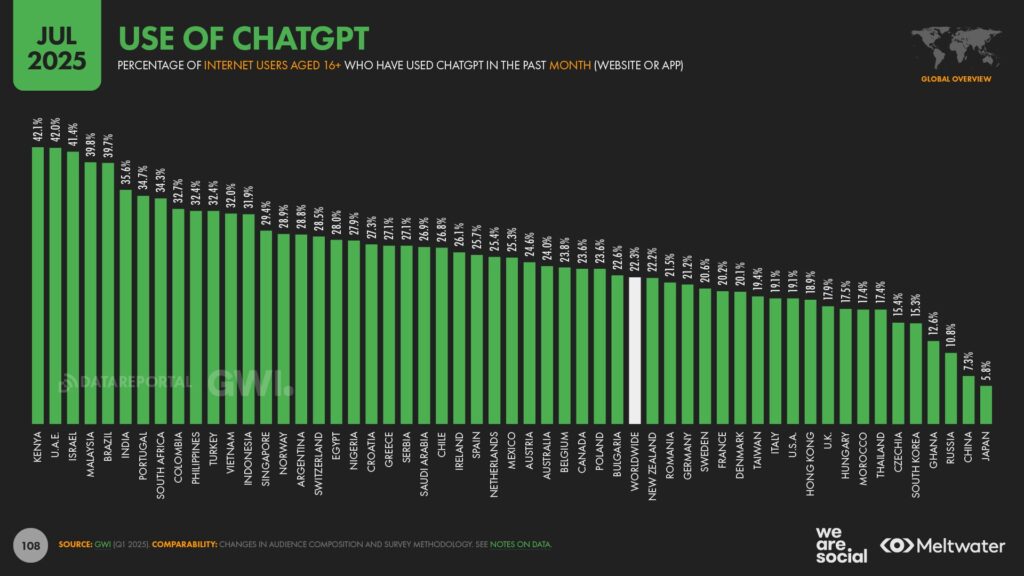
Generative AI is growing at 10 times the rate of other technologies. Africans are also among the earliest adopters globally: 42.1% of Kenyans over 16 use ChatGPT, a higher adoption rate than in the US, UAE, or Israel.
This shift is especially significant for informational searches. While users may still rely on traditional search for some commercial queries, generative AI is quickly becoming the first stop for product discovery, recommendations, and comparisons.
Online discovery is changing
The process of digital discovery has always evolved: first, businesses were pressured to launch websites. Then, they needed social media managers to build a presence on emerging platforms. Next came search engine optimization (SEO), which has dominated brand visibility strategies for over a decade.
Now, the rapid adoption of generative AI is rewriting the rules again. It is no longer enough to optimize for search engines—you must also optimize your brand for chatbots.
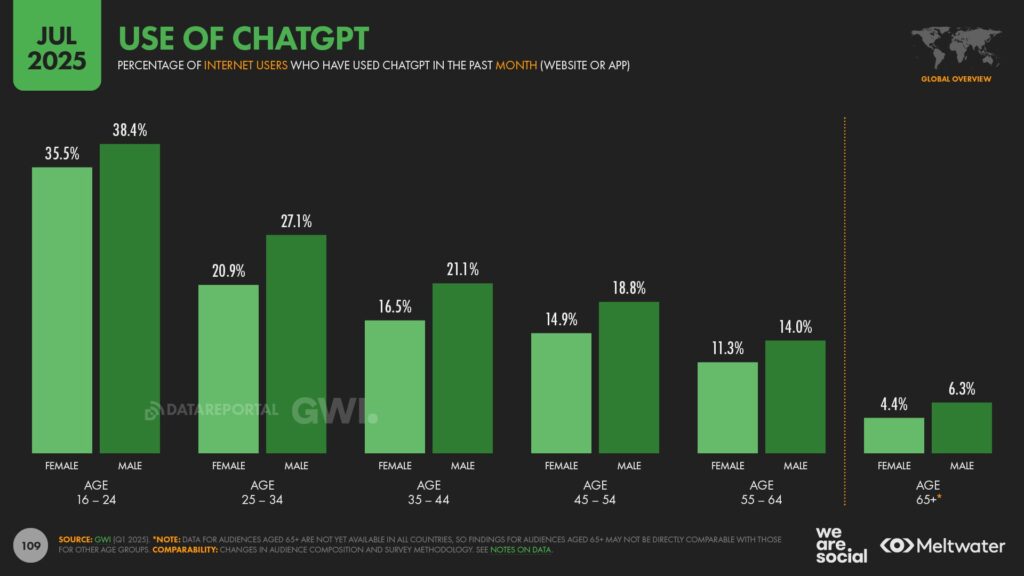
A DataReportal report says that 37% of internet users aged 16 to 24 say that they used ChatGPT in July 2025. While many still prefer classic search for broad information, users increasingly trust AI assistants for product recommendations and comparisons. This means AI is shaping the perception of companies and products in real time.
Just as the early headache for businesses was getting their websites crawled by Google, the new challenge is ensuring AI chatbots know your brand and what you stand for. Some brand owners are even asking customers to search their products directly inside AI chatbots, to test whether they show up.
AI is redefining visibility
The rise of AI search does not mean search engines are obsolete. In fact, according to Backlinko, ChatGPT and other AI tools still rely heavily on pages indexed by Google.
If your page isn’t indexed on Google, there’s a good chance AI chatbots won’t find you. Being indexed by Google has become more valuable than ever—not just for traffic, but for being surfaced in AI summaries, answers, and recommendations.
AI search optimization vs traditional SEO
It’s important to distinguish between traditional SEO and AI Search Optimization:
- Traditional SEO: Optimizing content to rank web pages in search engine results.
- AI Search Optimization: Optimizing content so that AI algorithms can generate answers and cite your brand in responses.
Both still matter, but the goals and methods differ.
How to optimize your content for ai search
When users ask AI tools questions, the algorithms summarize content and pull snippets from multiple sources. To ensure your brand is cited, your content must be structured in a way that AI can easily parse, understand, and trust.
1. Clear writing
Write in simple, crisp, and accessible language. AI models parse straightforward writing more effectively than jargon-heavy or keyword-stuffed content.
2. Context is king
Generative AI is hungry for context. An oversaturation of shallow online content is why OpenAI is partnering with Reddit to access authentic, lived experiences. To stand out, your content should provide depth, local realities, data, and insights. This is far more effective than simply overloading text with keywords.
3. Be citation-friendly
AI tools prefer structured, credible content. Use authoritative sources, reference them properly, and build your arguments on trustworthy data.
4. Conversational tone
Adopt a conversational style. Incorporate FAQs, schema markup, and clear headings. This makes your content more likely to be cited as a reliable, user-friendly source.
The imperative for communications leaders
This shift is not just about adding AI mentions to your pitch decks or operational processes. It is about embedding AI considerations into your communications strategy.
Ignoring AI in communications today is like ignoring websites in the early 2000s or social media in the 2010s. The opportunity lies in proactively integrating AI-ready messaging into your content, so your brand is present wherever customers search—whether on Google, Bing, or inside their favorite chatbot.
Do not be a bystander in this transformation. Instead, prepare your brand to thrive in the age of generative AI discovery.